Collinite Heritage vs. Ceramic Technology: Evolution of Paint Protection
The Bridge Between Tradition and SiO₂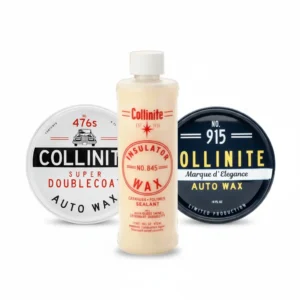
For decades, Collinite has been synonymous with industrial-grade durability. As the detailing industry shifts toward SiO₂ (Silicon Dioxide) and ceramic coatings, the core question is whether modern chemistry compromises the “bulletproof” reputation of legacy waxes. Collinite’s approach integrates ceramic technology not as a replacement, but as a specialized expansion of their legendary protection standards.
The Collinite Benchmark: Engineering for Failure-Prone Environments
Unlike brands driven by marketing cycles, Collinite’s DNA is rooted in high-stakes environments:
- Power Line Insulators: Protecting high-voltage equipment from electrical arcing.
- Marine Applications: Withstanding constant saltwater saturation and UV degradation.
- Automotive Extremes: Surviving harsh northern winters and road salt.
Whether a formula utilizes natural carnauba or nano-infused ceramics, the benchmark remains the same: it must survive real-world conditions, not just laboratory tests. If a product cannot offer multi-season longevity, it does not earn the Collinite name.
Technical Comparison: Traditional Wax vs. Ceramic SiO₂
To help users choose the right protection, it is essential to understand the structural differences between these two technologies.
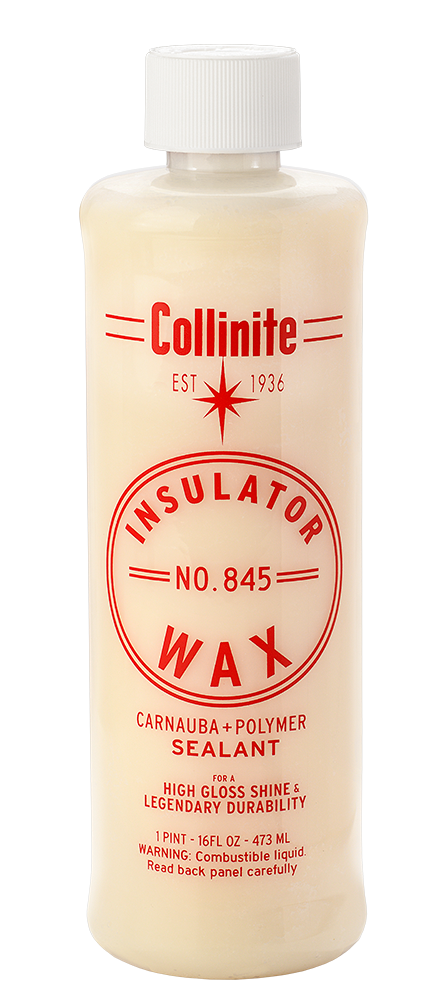
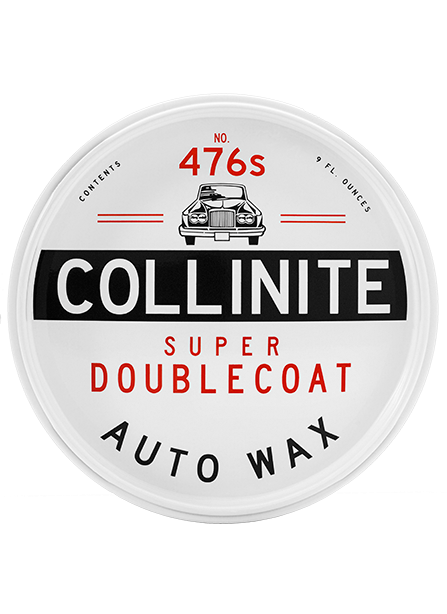
| Feature | Legacy Waxes (845, 476s, 915) | Ceramic Offerings (SiO₂) | ||
| Primary Base | High-grade Carnauba & Polymer Resins | Silicon Dioxide (SiO₂) Nano-particles | ||
| Protection Type | Dense, physical sacrificial barrier | Chemically resistant, microscopic layer | ||
| Visual Effect | Deep, warm “wet” gloss | Sharp, glass-like transparency | ||
| Surface Prep | Forgiving; masks light imperfections | Requires “surgically clean” surface | ||
| Water Behavior |
|
Extreme hydrophobicity (beading + sheeting) | ||
| Best For | Harsh winters, salt, and older paint | Ease of maintenance and UV resistance |
Old School: The Heavy Lifters (476s, 845, 915)
Traditional Collinite sealants are “physical” protectors. They create a thick, tangible layer over the clear coat.
- Key Advantage: They excel at masking light swirls and providing a warm aesthetic that ceramics often lack.
- Durability: Renowned for resisting chemical stripping from road salt and heavy detergents.
- Application: Ideal for enthusiasts who prefer a tactile waxing process and want a “bulletproof” winter prep.
New School: The Slick Shield (Ceramic Technology)
Collinite’s entry into SiO₂ technology focuses on surface energy. Rather than relying on the mass of the product, ceramics modify the paint surface at a molecular level.
- Self-Cleaning Properties: The extreme slickness reduces dirt adhesion, meaning the vehicle stays cleaner for longer.
- Chemical Resistance: Superior protection against bird droppings, acid rain, and environmental fallout.
- Efficiency: Designed for faster application and simplified maintenance cycles without sacrificing the brand’s signature longevity.
Conclusion: Coexistence Over Replacement
The evolution of Collinite is not about abandoning the past; it is about providing the right tool for the environment. While Collinite 845 remains the gold standard for rugged, “set-it-and-forget-it” protection, their Ceramic offerings provide a modern solution for those prioritizing ease of maintenance and high-tech water shedding.