Why Traditional Carnauba Waxes and Sealants Still Have a Place in Your Garage
Despite the rapid rise of ceramic coatings and SiO₂-infused products, traditional waxes and hybrid carnauba/polymer sealants continue to hold a loyal following—and for good reason. For many enthusiasts and everyday drivers, they offer a balance of appearance, ease of use, affordability, and flexibility that ceramic products don’t always match.
Here are some of the biggest reasons carnauba waxes and sealants remain relevant:
1. The Warmth and Depth of Carnauba
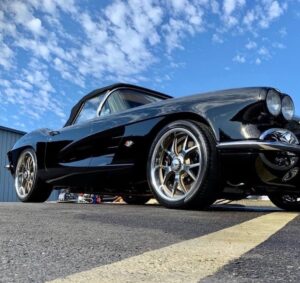 One of the biggest reasons enthusiasts still reach for a quality carnauba wax is simply the look.
Carnauba creates a rich, warm glow that many describe as making paint appear “deeper” or “wetter.” Dark colors, reds, blacks, and classic cars often benefit from this softer, more natural finish compared to the sharper, highly reflective appearance of many ceramic products.
For owners who value aesthetics above all else, the final look is hard to beat.
2. Easier Application
Traditional waxes and sealants generally require:
- Less preparation
- No special lighting
- No time needed before the vehicle can be exposed to the natural elements
- No coating-specific leveling techniques
- No concerns about high spots
Most can be applied in the garage over the weekend with minimal tools and experience.
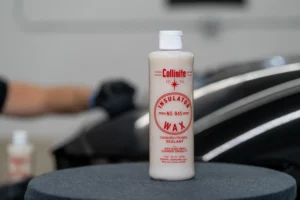
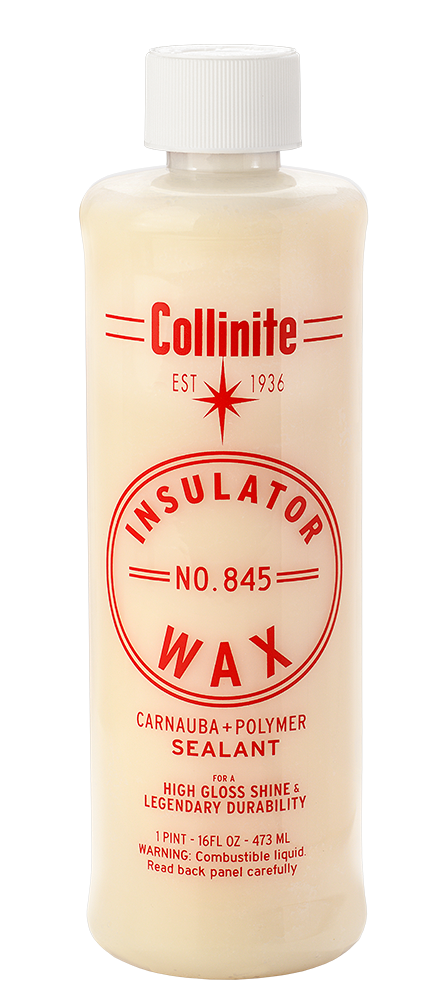
For someone maintaining a daily driver, simplicity and practicality matter. In its testing, Road & Track named Collinite No. 845 Insulator Wax its Top Pick, writing:
“Collinite No. 845… is exactly the kind of product you end up reaching for again and again because it just works.”
That simple statement captures why products like 845 have remained popular for decades. Drivers don’t necessarily want the newest technology—they want products that deliver consistent, repeatable results every time they detail their vehicle.
The magazine also praised 845 because it “bridges the gap between user-friendliness and professional-grade results,” noting that it “goes on easily, lasts for months,” without requiring multiple coats or complicated application techniques.
That’s exactly why so many weekend detailers continue reaching for traditional waxes. You don’t need specialized lighting, careful leveling, or curing windows. Just apply, buff, and enjoy the finish.
3. Lower Cost
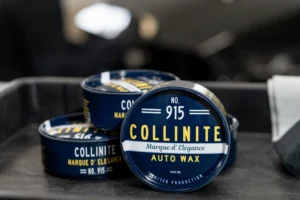 A quality wax or hybrid sealant often costs a fraction of a professional ceramic coating.
Even premium paste waxes, like Collinite No. 915 Marque D’Elegance, typically provide dozens of applications from a single tin, making them one of the most economical paint protection options available. Plus, many “waxes” actually contain polymer additives to aid in durability and UV protection. Marque D’Elegance for example, provides up to 8 months of protection from a single application.
4. More Forgiving
Ceramic coatings reward precision.
Traditional waxes reward enthusiasm.
Apply a little too much? Buff it off.
Miss a spot? Apply another coat.
Need to fix a mistake? It’s usually simple.
That forgiveness makes them approachable for beginners while remaining enjoyable for experienced detailers.
5. Enjoyable to Use
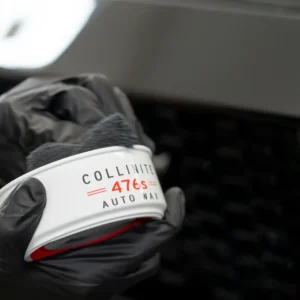 Many enthusiasts genuinely enjoy waxing their vehicles.
It’s relaxing. It’s hands-on. It creates a connection with the vehicle.
For some owners, detailing isn’t simply maintenance—it’s part of the hobby. Spending a Saturday applying a favorite paste wax is just as rewarding as driving the car afterward.
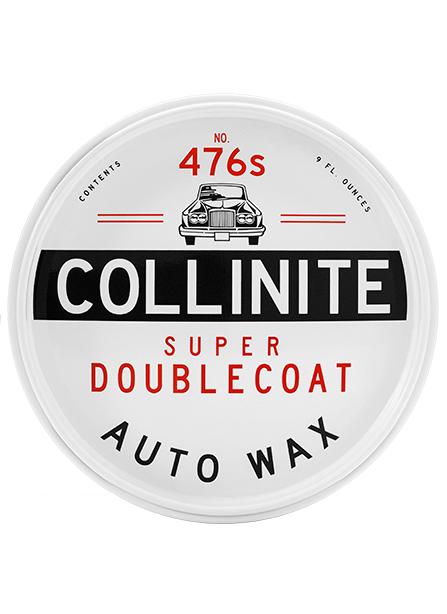
That sentiment came through perfectly in Car and Driver’s review of Collinite 476 Super Doublecoat, which described it as:
“Straight outta your grandpa’s garage, Collinite 476s Paste Wax is a tin of nostalgia… There’s something satisfying about waxing your car with the old-school stuff, regardless of how good new wax gets… Put on a Bob Seger record in the background and enjoy the process.”
That’s something ceramic coatings often overlook.
For countless enthusiasts, detailing isn’t simply another maintenance task—it’s part of owning the car. The ritual of applying a favorite paste wax, slowly buffing each panel, and watching the paint come alive is part of what makes the hobby enjoyable.
6. Easy to Refresh
Rather than waiting years before reapplying protection, waxes can be refreshed whenever desired. With coatings, you often subscribe to a regimen that if altered, may void a warranty.
Many automotive enthusiasts enjoy waxing:
- For Seasonal Maintenance
- Before car shows for show stopping gloss
- Before winter for protection against salt
- Immediately after a paint correction
Each application restores depth while providing additional durability.
7. Plenty of Protection for Most Drivers
 One of the biggest myths surrounding wax is that it offers only short-lived protection. While ceramic coatings certainly last longer, many people don’t actually need multi-year durability.
A quality hybrid wax or polymer sealant can still provide:
- Excellent water beading for up to 10 months
- UV protection for up to 1 year
- Road salt resistance
- Detergent resistance
For vehicles that are washed regularly, this is often more than sufficient.
Road & Track specifically noted that Collinite 845 “lasts for months” while producing strong water beading and a rich gloss.
That reinforces an important point:
For many drivers, especially those who wash their vehicles regularly, several months of durable protection is more than enough. They aren’t necessarily looking for a multi-year coating—they simply want dependable protection that’s easy to renew.
8. Great Compatibility with Paint Correction
After polishing, many enthusiasts enjoy selecting the perfect finishing wax.
A premium wax or sealant highlights the freshly corrected finish while adding slickness and gloss without permanently locking in the surface.
If additional polishing is needed later, removing a wax is much simpler than removing a ceramic coating.
9. Works Well on Older Paint
Not every vehicle has a flawless clear coat.
Older finishes, single-stage paint, and classic vehicles often respond beautifully to traditional waxes, which can visually soften minor imperfections while enriching color.
Many collectors continue using traditional waxes on vintage vehicles for exactly this reason. Ceramic coatings should generally only be applied to surgically clean or nearly perfect paint.
10. No Long-Term Commitment
One advantage that often goes overlooked is flexibility. Use a different auto shampoo when it suits you, or top a wax with a different polymer or ceramic spray wax. Chances are it will be compatible and only add to the gloss and protection.
Want to try a different product next month? No problem.
Traditional waxes gradually wear away and can easily be replaced with another favorite product, allowing enthusiasts to experiment with different looks and formulations.
A ceramic coating may offer a 5 or 7 year warranty which is often longer than the average owner will keep their vehicle.
The Best Choice Depends on Your Priorities
Ceramic coatings excel when maximum longevity, adding an element of paint hardness and chemical resistance are the primary goals.
Traditional waxes and carnauba/polymer hybrid sealants shine when owners value:
- Exceptional gloss and warmth
- Easy application
- Affordability
- Flexibility
- An enjoyable detailing experience
- Simple maintenance and reapplication
For many enthusiasts, the choice isn’t either/or—it’s about using the right product for the right vehicle and the right lifestyle. A daily commuter may benefit from the long-lasting protection of a ceramic coating, while a weekend cruiser or show car might look its absolute best under a fresh coat of premium carnauba wax.
The enduring popularity of traditional waxes proves that while detailing technology continues to evolve, there’s still something timeless about the satisfaction of hand-applying a quality wax and stepping back to admire a finish that looks deep, glossy, and unmistakably cared for.
Traditional Doesn’t Mean Obsolete
The automotive industry has embraced ceramic technology, and for good reason. Ceramic coatings offer exceptional longevity and chemical resistance.
But as many independent tests demonstrate, that doesn’t mean traditional waxes have become irrelevant.
Road & Track selected an old-school hybrid liquid wax as its overall winner because it combined durability, appearance, and ease of use in a package that simply works. Meanwhile, Car and Driver recognized a classic paste wax because it still delivers the experience—and results—that many enthusiasts value most.
The takeaway isn’t that one technology has replaced the other. It’s that the “best” paint protection depends on what matters most to the owner. For someone seeking years of protection, a ceramic coating may be the ideal solution. But for drivers who appreciate a rich, warm finish, straightforward application, and the satisfaction of hands-on detailing, traditional waxes and carnauba/polymer hybrid sealants continue to earn their place in the garage—just as they have for generations.

FAQs
Automotive
No.415 Color-Up Cleaner is an economically designed compound best suited for the removal of clear coat staining, brake dust, oxidation and other paint imperfections that can be commonly remedied by hand use. No. 415 can be used by both hand and DA polisher.
No. 390 Polish utilizes advanced abrasives specifically engineered to remove swirls/fine scratches while leaving behind a professional, mirror finish. To achieve these desired results, No. 390 is designed for machine use only (DA polisher and rotary).
No S-845 Speed Wax is designed to maintain and enhance an existing coat of any Collinite Sealant Wax (845, 915, 476s). While it does not replace the durable base coat durability found in one of our waxes, it does offer its own stand alone protection of up to 2 months. It can be used as often as desired to boost beading and provide a slick showroom gloss.
There are 2 options:
1. No. S-845 Speed Wax is the most effective option if boosting shine, gloss and protection are your primary objectives.
2. If a gentle cleaning (to address dust/prints/droppings/water spots) requiring surfactants is your primary objective, No. 520 Detailer is your best option. No.520 will also leave protection.
On average, S-845 Speed Wax will be 30-40% more durable than No. 520 Detailer.
Collinite 845 can also be layered over itself if additional protection and shine are desired
See our full wax comparison guide for a side-by-side chart →
Ceramic Coatings: Many professional detailers are successfully using 845 Insulator Wax as a topper for ceramic coatings. Check with the coating manufacturer whether a carnauba-polymer wax is suitable over the coating
Paint Protection Film (PPF): 845 Insulator Wax was tested successfully by the tech department at XPEL PPF. For additional information on Collinite wax’s compatibility with PPF, please contact us directly at [email protected].
845 will take on a thicker gel consistency in colder temperatures and a thinner liquid consistency in warmer temperatures. The different viscosities do not alter the performance. It can be used in either form.
Yes. Collinite 845 Insulator Wax is Collinite’s most “machine friendly” automotive wax. A finishing pad and low speed are optimal in order to obtain professional results. By hand, a thin layer is recommended to one section at a time. With DA and by hand, microfiber towels are recommended for removal. For one midsized vehicle, 2-3 towels are suggested.
Yes. Wait a minimum of 12 hours between coats to allow the product to fully cure.
While 476s is a traditional hard paste, it can be easily applied and removed. We recommend applying a thin layer to a small section (2 x 2 feet), and remove the wax once it comes to a haze. Typically, this takes anywhere from 1-3 minutes.
476s contains the highest concentration of polymer protection to withstand the harshest elements for the longest period of time. For this reason, we recommend 476s as a protective coating prior to the winter months.
For a full comparison with durability ratings, see our paste vs. liquid guide →
915 is specifically formulated to provide a deeper show room shine to darker colored, vibrant and metallic flake clear coat finishes. 915 contains the highest concentration of carnauba wax while still offering a high degree of polymer hydrophobic protection.
For a full comparison with durability ratings, see our paste vs. liquid guide →
Yes. 520 should be used regularly to remove fresh contaminants with its high lubricity formula. It will increase the life of an existing wax coat with its unique bead and sheet shine. It is compatible with all of Collinite’s finishing waxes (845, 476s, 915).
It is recommended that 520 be used over a base coat of one of Collinite’s finishing waxes for maximum protection. However, as a standalone, the product will provide water beading durability for up to 4 weeks as it is “Insulated” with Collinite’s signature polymer-carnauba wax protection.
With the aid of a DA polisher, No. 390 polish is designed to remove below surface contamination such as swirls, haze, marring and fine scratches. No. 415 is designed to remove other below surface contamination like clear coat staining, brake dust, & oxidation (and other contaminants that can commonly be remedied by hand use). A clay bar removes above the surface contaminants such as mineral deposits, embedded debris and tar.
If you have a smooth, contaminant free surface, 325 would not be necessary. While 325 is completely clear coat safe, it is designed to renew neglected paint finishes. It is meant to gently restore and protect the paint.
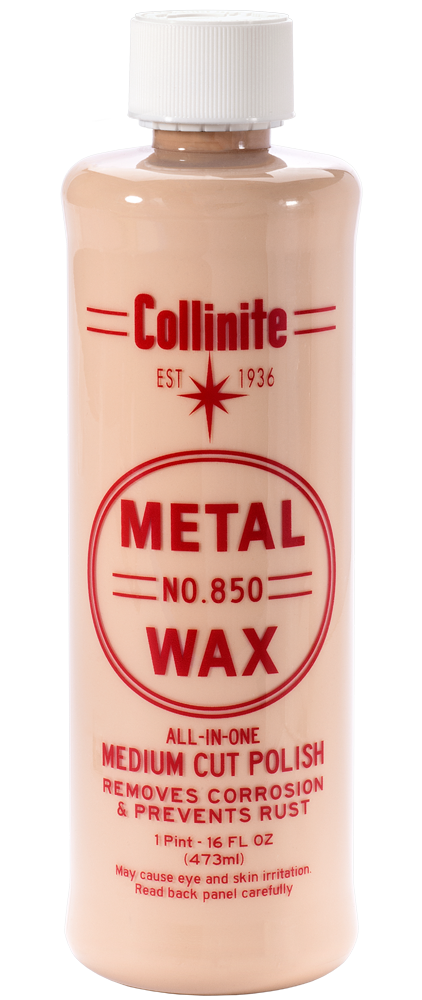
850 is an abrasive medium cutting polish and is designed to restore bare metals. If your metal is brand new or in brand new condition, we suggest protecting it with a pure wax (No. 845, No. 925 or No. 885). Use of No. 850 should also be avoided on painted metal as well as anodized aluminum.